THE BRISTOL EISTEDDFOD
An Eisteddfod is a festival involving several artistic competitions and Bristol is recorded as having had such an event in 1871/2 organised by the Bristol Welsh Literary and Musical Society. William Fowler felt there should be an Eisteddfod in Bristol which was open to allcomers without distinction of nationality.
In 1903, he founded the Bristol Eisteddfod and the first Eisteddfod was held at the Victoria Rooms that year. There were over 300 competitors from London, Bath, Cardiff, Bournemouth and Newport. By 1914, the entries had reached over 2000. Folk Dancing, Morris Dancing, Morris Jig, Country and Sword Dancing was introduced with Cecil Sharpe as Adjudicator. A set vocal piece called Snowdrops was written especially for the Eisteddfod by Dr Alfred J Silver.
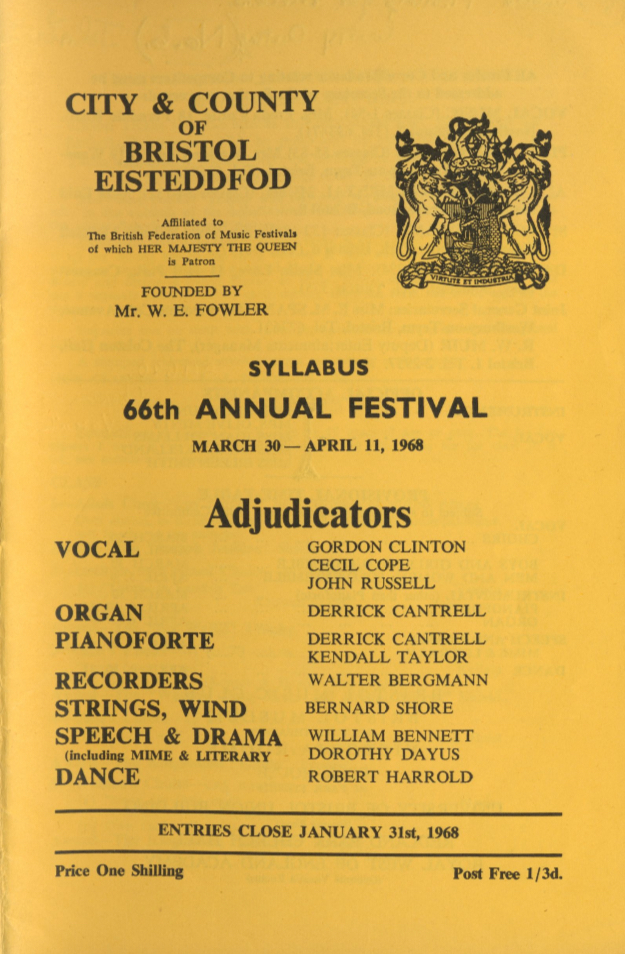
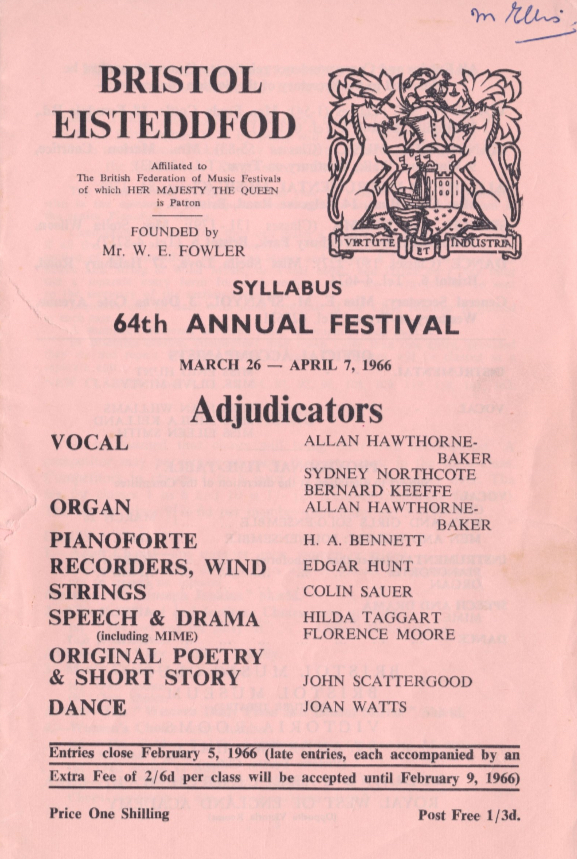
In 1915, the Victoria Rooms was taken over by the military and the Eisteddfod moved across the road to the Royal West of England Fine Arts Academy. By 1928, there were over 6000 performers which included 50 choirs and 900 folk dancers. The Royal West of England Academy, Bristol Music Club, Central Hall in Old Market, the Museum Lecture Theatre and Bristol Grammar School were also used as venues from the 1920s as numbers soared with competitors coming from England, Wales and even Scotland. For many years, two concerts were held in the Victoria Rooms at the end of the Eisteddfod and they were very popular. These were often attended by The Lord Mayor and Sheriff.
Over the years, the Eisteddfod has attracted prominent adjudicators including Sir Adrian Boult, Sir (Dr) A Herbert Brewer, Dame Clara Butt, Thomas F Dunhill, Dr Herbert Howells, Hubert Hunt, John Ireland, Hugh Roberton, Cecil Sharp, Sir Arthur Somervell and Gustav Holst.
The Bristol City Council subsequently took on the responsibility for running the Bristol Eisteddfod, but ceased funding it in the late 1990s. The dance section left the umbrella of the Eisteddfod and the Bristol Eisteddfod then changed its name to the Bristol Festival of Music, Speech and Drama – but it is still fondly referred to as The Bristol Eisteddfod.
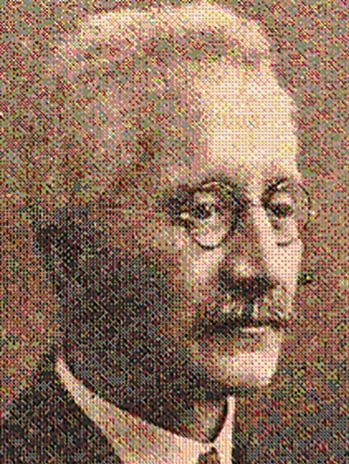
WILLIAM ERNEST FOWLER (1872-1954)
The Founder of the Bristol Eisteddfod, William Ernest Fowler, was born in St. Paul’s, Bristol, in 1872. At the age of 14, he became the organist at The Pro Cathedral and after ten years, moved to All Saints’ City, where he was organist for over fifty years.
In 1903, Fowler founded the Bristol Eisteddfod and it continued under his direction without a break even during the two world wars. In 1932, it was suggested that Fowler be given the Freedom of the City for his services to the arts and to Bristol.
In 1934, he was the Honorary Representative in Bristol for the Royal Academy of Music and the Associated Board of the Royal Schools of Music (ABRSM). He was the honorary local secretary of the Incorporated Society of Musicians (ISM).
William later retired to Portishead where he died at the age of 82.
THE BESS FOWLER TROPHY
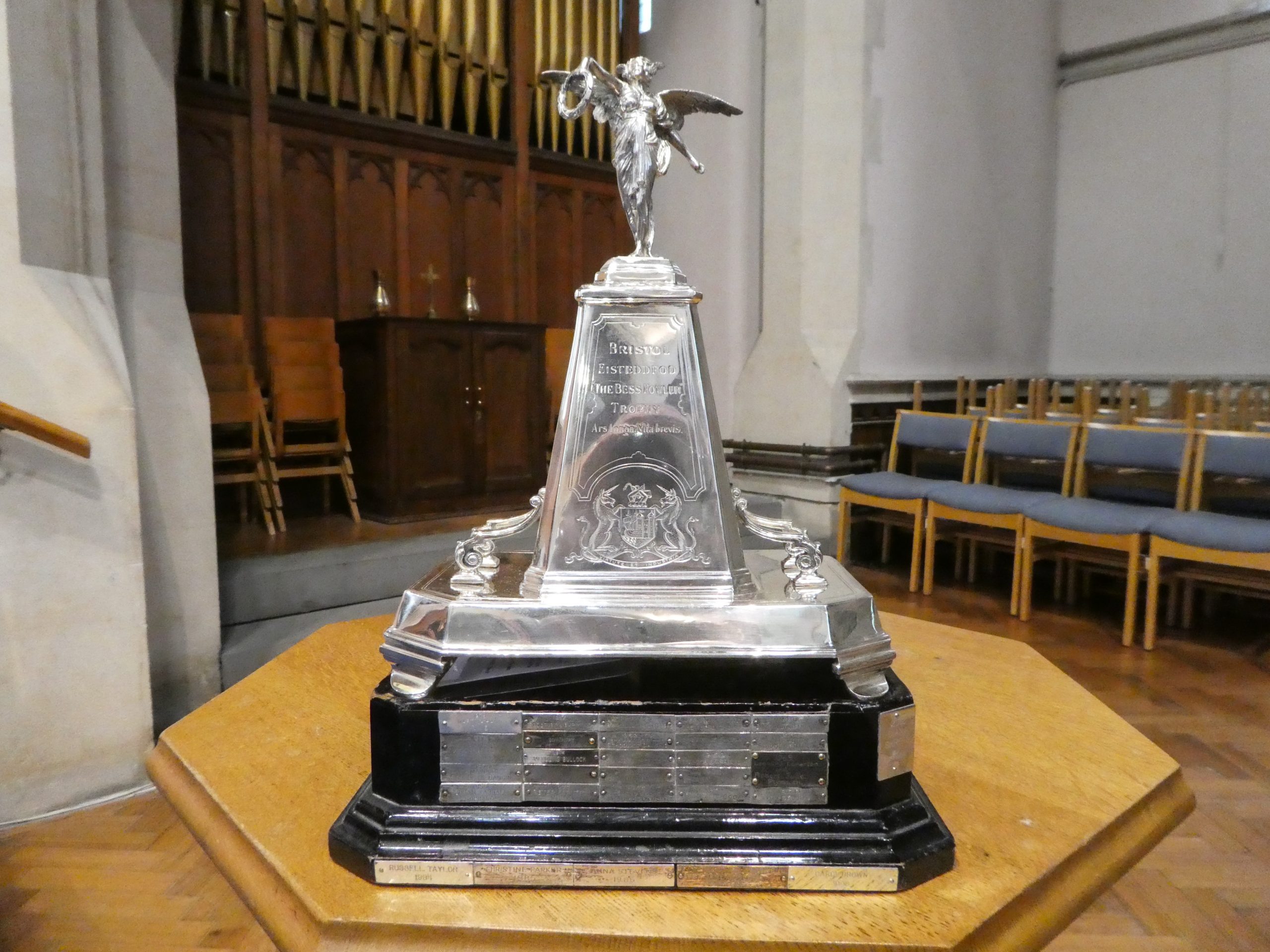
Madeline Bess Fowler, the wife of William Fowler, died in 1932. The following year, the Bess Fowler Trophy was specially commissioned for the Bristol Festival by the William Fowler, in memory of his wife who died at a relatively young age. She had been the Festival’s secretary for many years and had done so much behind the scenes.
The Bess Fowler Trophy is engraved Ars Longa, Vita Brevis or ‘Art is Long, Life is Short’. It is awarded to the competitor reaching the highest standard in the festival. The Festival Sections take it in turns to award the trophy every year – awarding it to the most aspiring performer and not necessarily the winner of any class from that Section. The trophy is presented at the Celebration Concert at which the recipient is expected to perform.
1996 Recorder – ?
1997 Speech & Drama – Alex Lee / Jean Dolphin
1998 ?Vocal – Andrea Marten
1999 ?Piano – ?
2000 ?Harp – ?
2001 ?Instrumental – ?
2002 Speech & Drama – Jean Dolphin / Susan Morgan ?
2003 Vocal – John Qualtrough
2004 Piano – Max Whittaker
2005 Harp – Benjamin Creighton-Griffiths
2006 Recorder – Amanda Waley
2007 Instrumental – James Black (saxophone)
2008 Speech & Drama – Margaret Williams
2009 Vocal – Coral Gould
2010 Piano – Lucy Barrett
2011 Organ – Benedict ?
2012 Harp – Diana Shroff
2013 Instrumental – ?
2014 Speech & Drama – Molly Drake
2015 Vocal – Emma Pelkiewiz
2016 Piano – Clara Sherratt
2017 Harp – Jess Hughes
2018 Organ – Robin Pillinger
2019 Instrumental – Flora Clapham (violin)
2020 (Covid)
2021 (Covid)
2022 Speech & Drama – Emma Paine
2023 Vocal – ?
2024 Organ – ?
2025 Speech & Drama – ?
2026 Piano – ?
2027 Instrumental
2028 Vocal
2029 Choir & Vocal Ensembles
2030 Harp
2031 Organ
2032 Piano
2033 Speech & Drama
2034 Vocal
2035 Choir & Vocal Ensembles
2036 Harp
2037 Instrumental
2038 Organ
2039 Piano
2040 Speech & Drama
2041 Vocal
2042 Choir & Vocal Ensembles
2043 Harp
2044 Instrumental
2045 Organ
2046 Piano
2047 Speech & Drama
2048 Vocal